How to Use Nature as a Basis for Spiritual Rituals
Using nature as a basis for spiritual rituals means borrowing the structure, pacing, and symbolism of the outdoors (seasons, elements, plants, weather) to build a personal practice around reflection and intention-setting. It won't rearrange your circumstances by itself, but a growing body of research on time outdoors and on reflective writing shows it can measurably shift your stress levels, mood, and focus, which is exactly the ground a ritual needs to work from.
Why Nature Works as a Ritual Backdrop
People across history have built ceremonies around sunrise, harvest, and the turning of seasons for a practical reason: nature gives you a fixed structure to hang a practice on. You don't have to invent the calendar or the symbolism from scratch. That said, the research on why time outdoors helps is about nervous-system regulation, not about the land "sending" you anything.
What the Research Actually Shows
A large observational study of nearly 20,000 people in England, published in Scientific Reports, found that adults who spent at least 120 minutes a week in green or natural spaces were significantly more likely to report good health and high wellbeing than those with no nature contact at all, and it didn't matter whether that time came from one long visit or several short ones (White et al., 2019). Benefits leveled off somewhere between 200 and 300 minutes a week, and the researchers were careful to note this was correlational data, not proof that nature exposure causes the improvement.
Practically, that means a 20-minute walk three or four times a week, or one longer weekend hike, is a defensible baseline for a nature ritual, not a mystical minimum, just the dose that shows up in the data.
The Four Elements as Focusing Devices
Earth, water, fire, and air are useful less as literal forces and more as attention prompts, each one gives you a different sense to focus on and a different question to sit with:
- Earth: grounding and stability. Prompt: "What am I standing on right now, literally and figuratively?"
- Water: emotion and change. Prompt: "What do I need to let move or drain?"
- Fire: energy and transformation. Prompt: "What do I want to burn away or fuel?"
- Air: thought and communication. Prompt: "What do I need to say, or stop rehearsing?"
Using them as a four-part checklist keeps a ritual from becoming a vague sit-and-stare session, each element gives you something concrete to notice and something specific to write about afterward.
Seasonal and Daily Cycles
Seasons and the daily light cycle are useful the same way a calendar or a habit tracker is useful: they give you a recurring cue to actually show up. Spring and sunrise suit rituals about starting something; autumn and dusk suit rituals about closing something out; winter and night suit rest and review. None of this changes outcomes in your life directly, it changes how consistently you practice, and consistency is what makes journaling or reflection work at all.
How to Build a Nature-Based Ritual, Step by Step
1. Pick a Location You Can Actually Return To
A ritual only works if you repeat it, so prioritize a spot you can reach in under 15 minutes over an "ideal" one you'll visit twice. A backyard, a nearby park bench, or the same stretch of sidewalk with a tree on it all count. Repetition to the same spot builds the association faster than novelty does.
2. Set a Time Budget, Not Just a Vibe
Decide in advance: 10 minutes, 20 minutes, or a full hour. Vague "whenever I feel called" plans are the ones that quietly stop happening. If you're using this for stress relief specifically, 20–30 minutes outdoors, two to three times a week, is roughly the range studied for lowering cortisol in short-session research; if you're aiming for the broader wellbeing effect above, stack toward 120 minutes across the week.
3. Bring One Object, Not a Collection
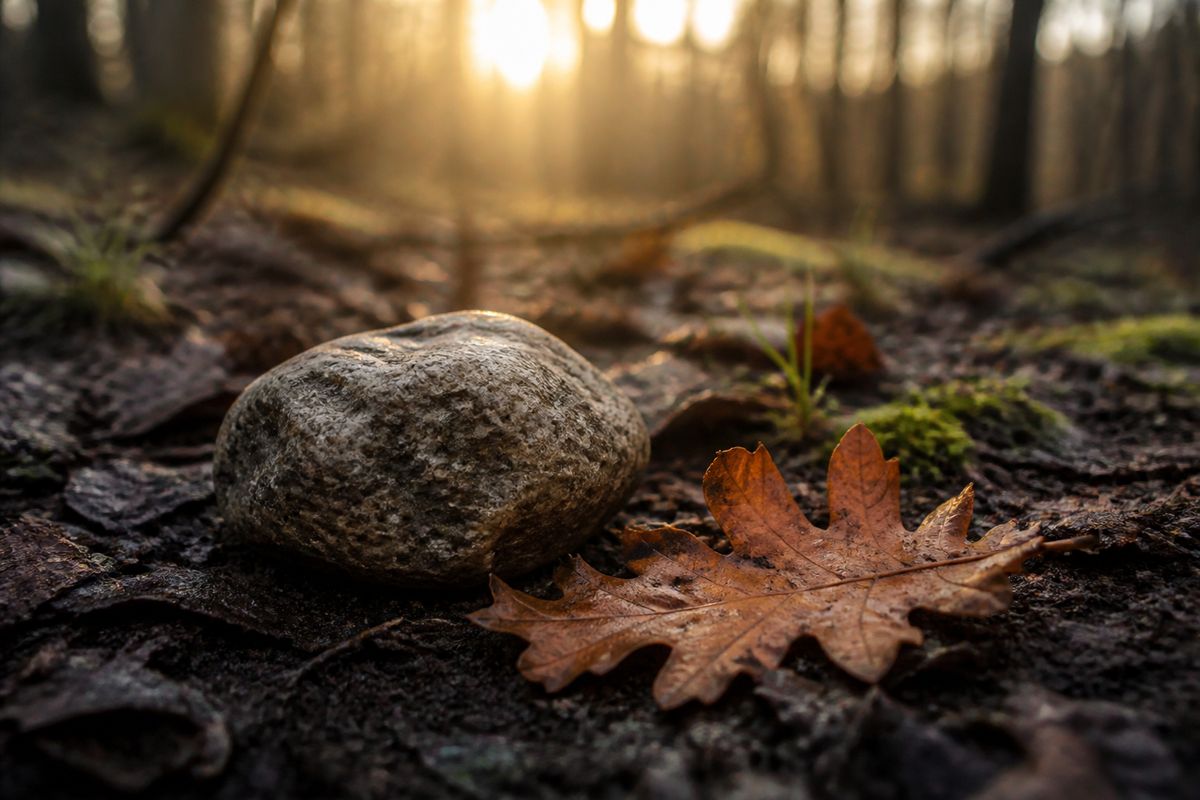
A single stone, leaf, or seed pod you picked up that day is enough. It becomes a physical marker you can hold during the reflection and set on a shelf afterward as a reminder of what you decided or noticed. Skip building an "altar" if that word doesn't fit your beliefs, a windowsill with one object works the same functionally.
4. Name One Actual Intention
Write or say a single concrete sentence before you start: "I'm here to decide whether to take the new job," not "I'm here to invite abundance." Vague intentions produce vague sessions. Specific ones give you something to actually resolve by the end.
5. Close With Three Written Lines
Before you leave the spot, write three sentences: one thing you noticed, one thing you felt, one thing you'll do differently this week. This is the step most people skip, and it's the one with the actual evidence behind it, see below.
Why the Writing Step Matters More Than the Setting
If you only take one thing from this article: the outdoor setting helps you feel calmer, but the writing is what makes the practice stick. Robert Emmons, one of the psychologists behind the core gratitude-journaling research, found that people who wrote down what they were grateful for once a week for six weeks reported a real boost in happiness, while a group who wrote three times a week saw no benefit, likely because frequent repetition dulls the effect (Greater Good Science Center, UC Berkeley). The same source notes that gratitude aimed at specific people tends to land harder than gratitude for objects or generic good fortune, and that "going through the motions" without genuine attention blunts the effect.
Translated into a nature ritual: journal after the walk, not during it; do it weekly rather than daily if you want it to keep feeling meaningful; and write about a specific person, moment, or decision rather than a general "I'm thankful for nature" line.
Seasonal Rituals That Actually Hold Up
- Spring: Plant something (even a single herb pot) as a stand-in for a decision you're committing to. The ongoing care becomes a weekly check-in.
- Summer: Pick one accomplishment from the past six months and write down who helped you get there. Say thank you to that person directly, it's the specific-person effect above.
- Autumn: Write a short list of what you're setting down for the year, then physically discard or bury the paper.
- Winter: Review your three-line closing notes from the rest of the year. Look for the one theme that repeats.
What This Practice Does and Doesn't Do
It does: give you a structured, repeatable way to lower stress, process a decision, and build a habit of reflection, supported by real research on time outdoors and on written gratitude/reflection practices.
It does not: manifest a job offer, a relationship, or a financial outcome into existence, and there's no credible evidence that arranging stones or invoking elements changes events outside your own mind and behavior. Treat every ritual here as a tool for clarity and follow-through, not a request sent to the universe with a guaranteed reply.
Respecting the Land You're Using
A few ground rules keep this practice from doing harm:
- Leave the site exactly as you found it, pack out anything you brought in, including offerings like food or trinkets, which can harm wildlife.
- Don't pick living plants or disturb habitat for a ritual object; deadfall (fallen leaves, dropped feathers, loose stones) is the better default.
- If you're drawing on a specific indigenous tradition's element or ceremony, learn its actual context and origin rather than lifting the aesthetic. Borrowing imagery without the culture behind it flattens practices that carry real meaning for the people who hold them.
FAQ
Do I need to live near wilderness for this to work?
No. The 120-minutes-a-week research was based on ordinary green spaces, parks, gardens, and city nature reserves, not remote wilderness. A backyard or local park is enough.
How long before I notice anything?
The gratitude-writing research showed a happiness increase after six weeks of once-weekly journaling. Stress-focused nature time showed measurable cortisol changes within a few sessions in shorter studies. Expect gradual mood and clarity shifts, not an immediate change in outside events.
Is this a religious practice?
It can be, but doesn't have to be. Everything above works as a purely secular reflection habit; add spiritual or religious framing only where it genuinely fits your own beliefs.
What if I only have a balcony or a single houseplant?
That's enough to run the same steps: a fixed spot, a time budget, one object, one intention, three closing lines. The size of the green space matters far less than the consistency of the practice.