
How to Foster a Culture of Gratitude in the Workplace
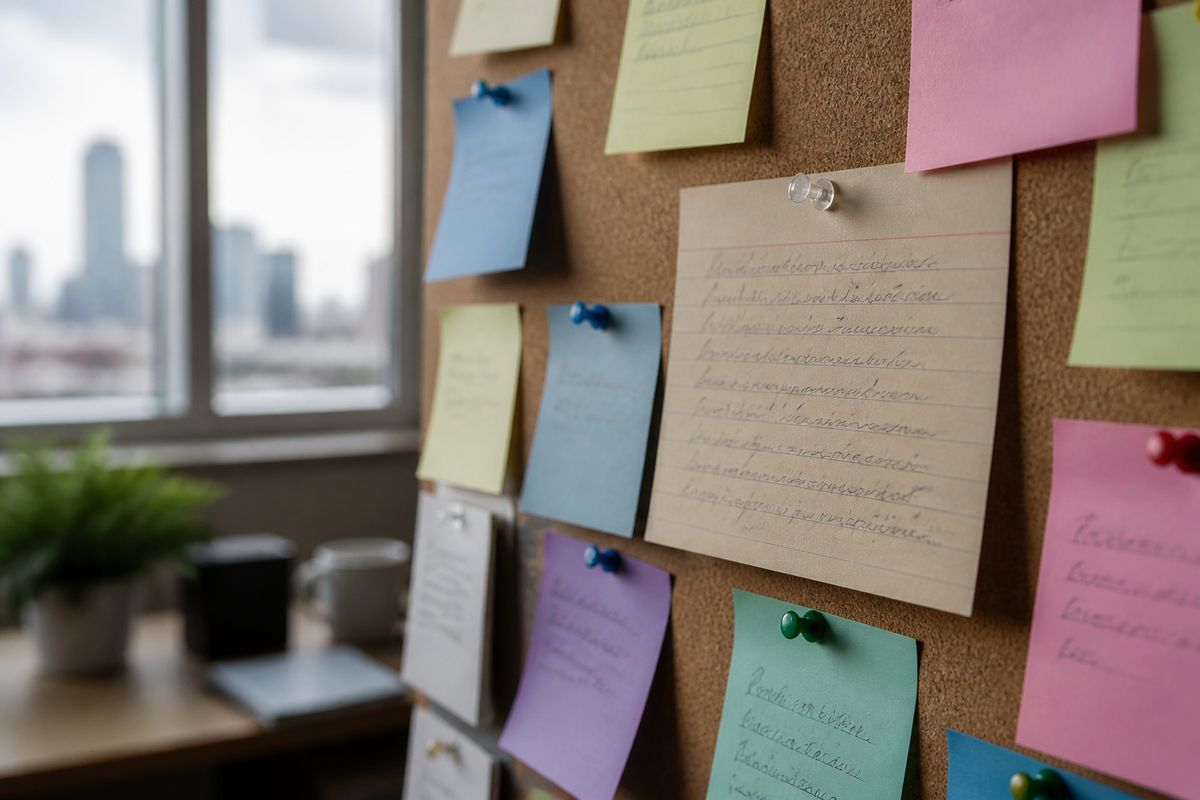
How to foster a culture of gratitude in the workplace comes down to a few repeatable habits: leaders modeling it publicly, structured ways for peers to recognize each other, and enough consistency that appreciation becomes normal instead of an occasional event tied to a holiday or an annual awards night.
None of this requires a big budget or a "chief happiness officer." It requires specific, repeated behaviors that get built into how the team already works. Below is what actually moves the needle, what doesn't, and how to know if it's working.
Why This Is Worth the Effort
The research on workplace recognition is more concrete than most "culture" advice. A Gallup-Workhuman analysis that tracked nearly 3,500 employees from 2022 to 2024 found that employees who received high-quality recognition were 45% less likely to have left their job after two years, and 65% less likely to be actively job-hunting, compared with employees getting lower-quality or no recognition. The same research found only 22% of employees currently say they get the right amount of recognition for their work, which means most workplaces are leaving this on the table (Gallup, 2025).
Smaller-scale intervention studies point the same direction. In a randomized trial of over 1,500 health care workers who wrote a single gratitude letter, participants who completed a one-week follow-up showed measurable drops in emotional exhaustion and increases in reported happiness and work-life balance. The catch: only about 18% of participants completed the follow-up, and the researchers were upfront that they couldn't fully separate the effect of the letter-writing from other factors, including possible expectancy effects. Read it as "promising, not proof" (Journal of Medical Internet Research, 2020).
What this data does not show: that gratitude programs single-handedly fix disengagement, burnout, or a toxic manager. Recognition is a lever, not a cure. If people are underpaid, overloaded, or reporting to someone who undermines them, a gratitude board will not offset that.
1. Leaders Go First, Specifically
Generic praise ("great job, team") reads as noise. Specific praise reads as attention. Compare "thanks for your hard work this quarter" with "the way you caught the billing error before it went to the client saved us a client relationship, and that's the second time this year you've caught something like that."
- Name the behavior, not just the person. Say what they did and what it affected.
- Do it where others can see it: a team meeting, a shared channel, a company update, not only in a private message. Public recognition does double duty: it thanks the person and shows everyone else what "good" looks like.
- Put recognition inside normal feedback, not just performance reviews. If the only time someone hears what they're doing well is once a year in a review, it doesn't function as ongoing reinforcement.
2. Build a Peer Recognition System (Not Just a Top-Down One)
Recognition that only flows manager-to-employee misses most of the interactions that actually happen day to day. Peer recognition catches the things a manager never sees: someone staying late to help a teammate hit a deadline, someone walking a new hire through a confusing process.
- Use a lightweight tool (Bonusly, Kudos, or even a pinned Slack/Teams channel called #shoutouts) so recognition is visible and searchable, not lost in DMs.
- Set a small cadence expectation, for example one shoutout per person per month, so it doesn't quietly die out after the first few weeks of enthusiasm.
- Tie it to something concrete: a finished task, a favor, a specific save. Vague "you're awesome" posts fatigue fast; specific ones don't.
3. Make Recognition Structural, Not Just Spontaneous
Spontaneous thanks matters, but it's inconsistent by nature: it depends on someone remembering to say it. A structural layer makes sure recognition happens even on a busy week.
- Recurring recognition slot: two minutes at the start or end of a weekly team meeting reserved for call-outs.
- Milestone acknowledgment: work anniversaries, finished projects, and first 90 days on the job are natural, low-effort trigger points. Put them on a calendar so they don't get missed.
- Onboarding inclusion: mention how the team recognizes good work during new-hire onboarding, so it's treated as part of "how we work" rather than an optional extra.
4. Ask, Don't Assume, Whether It's Landing
Recognition efforts can quietly become performative: a program that looks good on a careers page but that employees privately roll their eyes at. The only way to know is to ask.
- Short anonymous pulse survey, 3-5 questions, quarterly: "Do you feel your contributions are noticed?" "Has a coworker recognized your work in the last month?"
- One-on-ones: ask directly whether someone feels their work is seen, not just whether they're "doing okay."
- Track it over time. A single survey is a snapshot; a repeated one shows whether the changes you're making are actually working or just adding noise.
5. Gratitude Journaling as an Individual Practice (Optional, Not Mandated)
Some teams offer gratitude journaling as an opt-in practice rather than a company program. It's a personal habit, and making it mandatory tends to kill it. The format that shows up in research: writing down up to five specific things you're grateful for, at least three times a week, for at least two weeks. Specificity matters more than length: "the coffee my teammate brought me during a rough morning" works better than "my job."
A foundational study on this format found that participants who kept a weekly gratitude journal for ten weeks reported more positive mood, more optimism about the future, and better sleep than a control group who journaled about neutral or negative events (UC Berkeley Greater Good Science Center). This is a well-being tool for the individual, not a mechanism that changes external outcomes like a raise or a promotion. Treat it as a mood and focus practice, not a guarantee of anything beyond that.
If you want to offer this at work: keep it private by default (a personal notebook or app, not a shared doc), and never make it a metric anyone is evaluated on.
What Doesn't Work
- One-off events with no follow-through. An annual awards ceremony that isn't backed by anything day-to-day reads as PR, not culture.
- Recognition tied only to top performers. If the same three people get all the shoutouts, everyone else tunes out.
- Mandatory participation. Forcing people to post a set number of "gratitudes" a week turns a genuine practice into a compliance task, and people can tell the difference.
- Using gratitude language to paper over real problems. If pay, workload, or management issues are the actual source of low morale, a recognition program will not fix them, and pushing it too hard when people are burned out can come across as tone-deaf.
FAQ
How long does it take to see a change in team morale?
Most teams that build a consistent peer-recognition habit notice a shift in tone within four to eight weeks. That's not because gratitude is magic, but because it takes that long for a new habit (shoutouts, meeting time, milestone tracking) to become routine rather than a novelty.
Does gratitude at work actually reduce turnover?
The strongest available data (the Gallup-Workhuman tracking study cited above) found a real association between high-quality recognition and lower turnover and lower job-search activity. It's an association from large-scale tracking, not a controlled experiment proving cause and effect for every workplace, but it's one of the more solid data points in this space.
Is a gratitude journal at work the same as a workplace recognition program?
No. A journal is a private, individual reflection habit aimed at the journaler's own mood and outlook. A recognition program is a team-facing system for acknowledging other people's work. They can coexist, but one doesn't substitute for the other.
What's the fastest thing to start with?
Pick one: a two-minute recognition slot in your next team meeting, or a #shoutouts channel with one rule (say what they did and what it affected). Small and consistent beats big and one-time.