Exploring Different Cultural Practices of Gratitude
Exploring different cultural practices of gratitude shows the same underlying habit wearing different clothes: naming what you have, out loud or in writing, on a schedule. The words change from country to country, but the mechanics repeat: a fixed moment (a meal, a festival day, a morning prayer), a specific act (saying a phrase, writing a list, building an altar), and a social witness (family, community, ancestors). That structure is worth borrowing even if you never adopt the culture it came from.
Why the ritual part matters, not just the feeling
Gratitude as a private feeling doesn't do much on its own. What changes people's mood and behavior is the deliberate act of noticing and recording it. A widely cited Harvard Health review of gratitude research found that people who wrote weekly about things they were grateful for, over a 10-week period, reported more optimism and fewer visits to the doctor than a group who wrote about daily irritations instead. In a separate study of over 400 people, participants who wrote and personally delivered a letter of gratitude to someone they'd never properly thanked showed a large jump in happiness scores immediately afterward, with some of that benefit still measurable a month later (Harvard Health Publishing). The effect isn't universal, and the same research notes it was weaker in some groups, including divorced middle-aged women and adolescents in one study, which is a useful reminder that gratitude practices support mood and outlook, not underlying life circumstances.
That's the throughline across the cultural practices below: each one forces gratitude out of your head and into a specific, repeatable action.
Thanksgiving and the modern gratitude journal (United States)
Thanksgiving dinner
US Thanksgiving grew out of harvest festivals and turned into a family meal (turkey, mashed potatoes, cranberry sauce, pumpkin pie) built around one recurring custom: going around the table so each person names something they're grateful for that year. The ritual works because it's public and specific. You have to say an actual thing, not just "everything," and everyone else hears it.
Gratitude journals
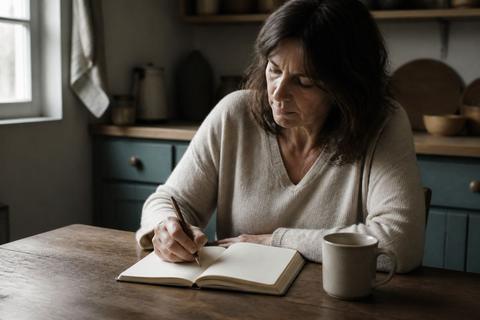
The self-help version of the same idea is writing down three specific things you're grateful for at the end of each day. "Specific" is the operative word: "my health" journaled every night stops registering after a week, but "the coworker who covered my shift on Tuesday" doesn't. If you're starting a journal habit, three lines a night for two to four weeks is enough to feel whether it's doing anything for you, rather than one entry and quitting.
Japan: arigato and wa
In Japan, arigato is the everyday word for thanks, but it carries a stronger sense of indebtedness than the English "thanks," closer to acknowledging that someone went out of their way to do something difficult for you. Gratitude here isn't limited to speech: the cultural value of wa, or harmony, pushes people to show appreciation through action, such as returning a favor, giving a small gift, or showing up to help, rather than relying on words alone. The practical takeaway is that saying thanks and doing something in return aren't treated as separate gestures. They're one gesture with two halves.
India: Diwali
Diwali, the Festival of Lights, marks the symbolic victory of light over darkness. As part of it, many households perform Lakshmi Puja, a prayer ritual giving thanks for the past year's blessings and protection before asking for continued prosperity. Gratitude for what already happened comes first; the request comes second. Families also exchange gifts and sweets with relatives and friends specifically as a way of acknowledging those relationships, not as generic gift-giving.
The Haudenosaunee Thanksgiving Address
Among the Haudenosaunee (Iroquois) Confederacy, made up of the Mohawk, Oneida, Onondaga, Cayuga, Seneca, and Tuscarora nations, the Ohenton Karihwatehkwen, or Thanksgiving Address, opens and closes community meetings and is also spoken individually at the start or end of a day. It moves through a fixed sequence: thanks to the earth, the waters, the fish, the plants, the food crops, the medicine herbs, the animals, the trees, the birds, and the winds, with each section ending in the line "now our minds are one" (American Yawp Reader). It closes by leaving room for whatever was missed, inviting each listener to add their own thanks in their own way. What makes it different from a one-time toast is the sequence: gratitude is broken into discrete categories instead of one vague feeling, which is easier to actually sit with.
Italy and Greece: gratitude as civic and social duty
La Festa della Repubblica
Italy's Republic Day, held every June 2, commemorates the 1946 referendum that ended the monarchy. It's less a personal gratitude ritual than a civic one: parades and ceremonies frame gratitude toward the people who shaped the country's postwar path as a shared, public obligation rather than a private feeling.
Philoxenia
The Greek concept of philoxenia, meaning roughly "friend to a stranger," treats hospitality toward guests as an expression of gratitude for one's own home and community. In practice this goes beyond feeding a guest. It includes sharing stories and time, on the logic that a household that can host generously has something to be thankful for, and shows it by extending the same welcome outward.
Mexico: Dia de los Muertos
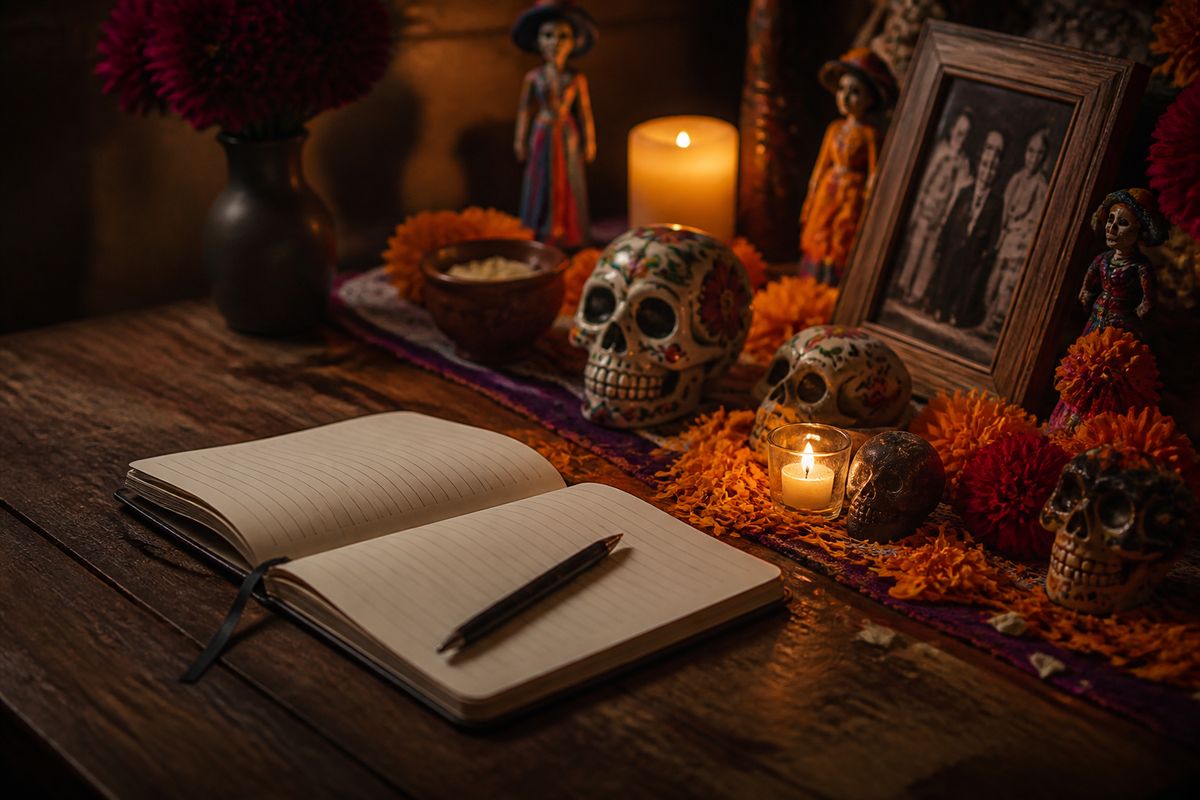
Held November 1 and 2, Dia de los Muertos centers on building ofrendas, home altars with photos, favorite foods, marigolds, and small offerings for family members who have died. It's a gratitude practice aimed backward and specifically: not "thank you for my life" in the abstract, but thanks addressed to named, remembered people for what they actually gave while alive. The specificity is what keeps the memory active across generations instead of fading into a general, faceless idea of "ancestors."
What to actually take from this
None of these practices claim that giving thanks magically changes your circumstances. They're social and psychological tools, not guarantees. The common design elements worth borrowing for your own practice:
- Fix a schedule. Daily (journaling), yearly (Thanksgiving, Diwali, Dia de los Muertos), or before and after a task (the Thanksgiving Address). Pick one and keep it.
- Name specifics, not categories. A person, an event, an object, not "my family" or "my health" repeated verbatim.
- Pair it with an action. A gift, a letter, an altar, a returned favor: something that leaves the practice instead of staying a private thought.
- Say it to someone, even if that someone is a memory, a tradition, or a page. The research above suggests the delivered, witnessed version of gratitude (a letter someone reads, a table someone hears you at) tends to land harder than gratitude that stays silent.
FAQ
Do I need to follow a specific culture's ritual exactly to get the benefit?
No. The research on gratitude journaling and letter-writing wasn't testing any of these specific traditions. It was testing the underlying habit of naming things specifically and regularly. Borrowing the structure (a schedule, specificity, an audience) matters more than reproducing any single culture's exact form, which isn't yours to claim as your own practice anyway.
Is there a "best" gratitude practice?
The studies above show benefits from both journaling and directly telling someone, with the direct, delivered version showing the largest short-term jump in happiness scores. If you only do one thing, telling a specific person a specific reason you're grateful to them will likely outperform a private list.
Can gratitude practices replace treatment for depression or anxiety?
No. These are mood- and outlook-support tools, not clinical treatments. If you're dealing with persistent depression, anxiety, or grief, gratitude journaling can sit alongside professional support, not substitute for it.