How to Choose the Right Journal for Your Needs
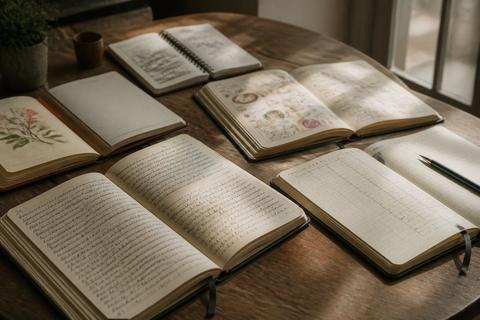
Picking the right journal for your needs comes down to matching four things: why you're writing, how you write (fast notes vs. long entries vs. sketches), where you'll carry it, and how much you're willing to spend. Get those four right and the notebook disappears into the background, which is the whole point, a journal that fights you on format is a journal you'll stop using by week three.
Start With Why You're Writing
The format question only makes sense once you know the job the journal has to do. Four common uses call for different layouts:
- Creative writing: poetry, fiction drafts, or morning pages benefit from open space and minimal structure.
- Academic or work notes: lecture notes, meeting notes, or research logs need lines or a grid to keep entries scannable later.
- Personal reflection: daily reflection or emotional processing works with almost any format, but ruled pages remove one small decision (where do I start writing?) that can stall you before you begin.
- Bullet journaling or planning: task tracking and habit logs need a dot grid or graph layout so boxes, tables, and trackers stay straight.
If your goal is processing something specific, a stressful event, a conflict, a big decision, consider a short, structured stretch of expressive writing rather than open-ended daily entries. Utah State University Extension describes a well-studied format: writing about your deepest feelings for 15–20 minutes a day over 3–5 consecutive days, focusing on emotions rather than just narrating events. That specific dose, not vague "journal more," is what the research on expressive writing actually tested.
Match the Journal to a Habit You'll Actually Keep
Before you shop, decide on a minimum you'll commit to: five minutes before bed, one page after coffee, three bullet points at lunch. A journal picked for a habit you don't have will sit on a shelf. Pick the format that removes friction from the habit you're realistically going to run.
Choose a Format That Matches How You Write
Once you know the purpose, the physical layout follows:
Lined Journals
Lined pages are the default for a reason, they keep handwriting level and entries easy to reread. Good for daily logs, morning pages, or anything text-heavy where you're not drawing.
Blank (Plain) Journals
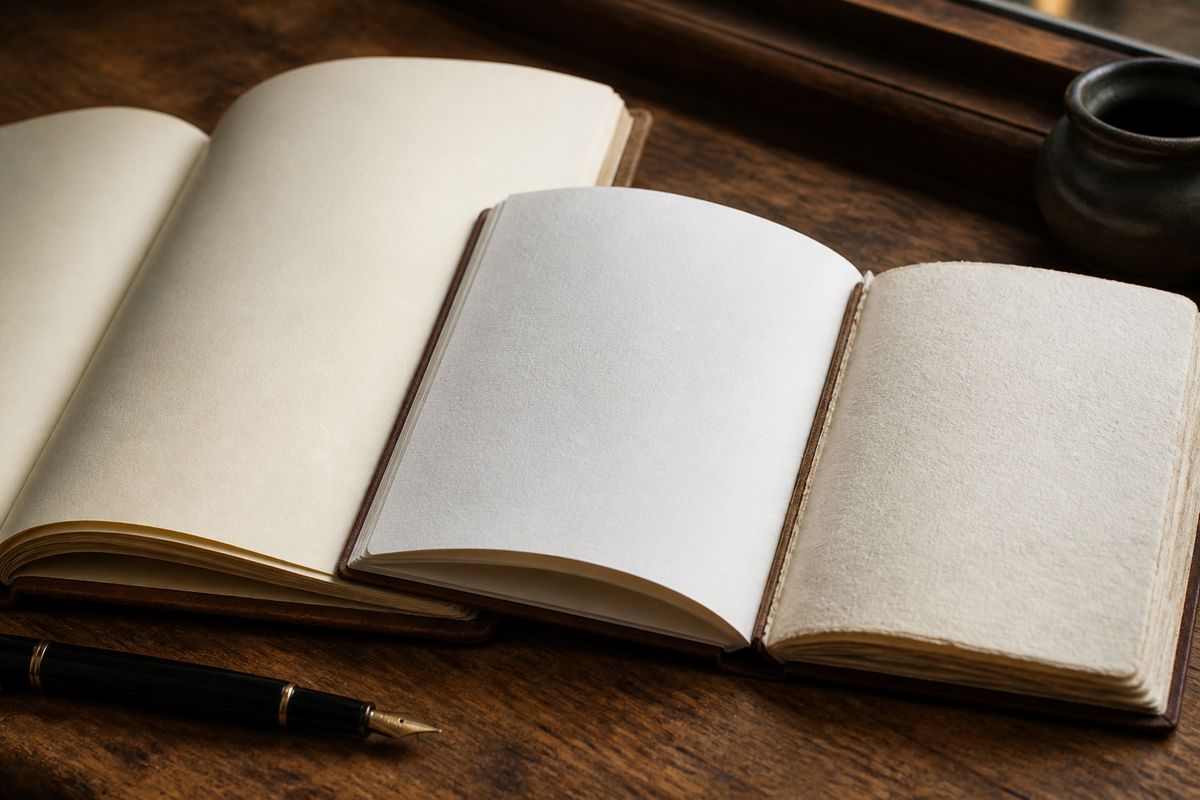
No lines means no visual pull toward horizontal text. Better for sketching, mixed media, mind-mapping, or writing that wanders across the page instead of down it.
Dot-Grid and Graph Journals
Dots give you enough structure to draw straight boxes and tables without the visual clutter of full lines showing through your layout. This is the standard choice for bullet journaling, habit trackers, and anything with columns.
Specialized Layouts
Gratitude journals, travel journals, and food or symptom logs come pre-printed with prompts or fields (date, mood, three things you're grateful for). These work well if you know you'll skip an empty page but will fill in three blanks. They also work poorly if your needs change, a five-year food-diary journal is a bad buy if you stop tracking food in month two.
Get the Size Right for Where You'll Use It
- Pocket / A6: fits a bag or jacket pocket; good for quick capture, weak for long entries because you'll fill pages fast and feel cramped.
- A5: roughly 5.8" x 8.3", the most common "everyday" size, small enough to carry, large enough for a full page of handwriting without feeling tight.
- A4 or letter-size: best at a desk, for art, or for long-form writing; awkward to carry daily.
A simple test: if the journal has to survive being thrown in a bag most days, oversized and hardcover options tend to get left at home. If it lives on a nightstand or desk, size stops mattering and paper quality and binding matter more.
Paper Quality: What Actually Matters
Thickness (GSM)
Paper weight is measured in grams per square meter (GSM). As a rough guide: 70–90 GSM is standard notebook weight and will show ghosting (shadows) or bleed-through with wet media like fountain pens or brush pens; 100–120 GSM handles most gel pens and fountain pens with minimal bleed; 160 GSM and up is aimed at markers, watercolor, or mixed media. If you write with a fountain pen or heavy gel pen, GSM below 100 is the single most common reason people return a journal.
Texture and Coating
Smooth, coated paper lets a pen glide but can make some inks sit on the surface longer (slower drying, more smudging for left-handed writers). Slightly toothier, uncoated paper absorbs ink faster and dries quicker but can feel scratchier with a fine-tip pen. Neither is objectively better, test with the actual pen you plan to use, not just your finger.
Binding: Durability vs. Lay-Flat Convenience
Spiral or Wire-Bound
Opens completely flat and pages turn easily, which matters if you're writing at a desk or drawing across a two-page spread. The wire is also the first thing to bend or snag in a bag.
Hardcover (Case-Bound or Stitched)
Holds up to being tossed in a bag daily and gives you a firm surface to write on without a table. Usually doesn't lie fully flat unless it's stitched (sewn) rather than glued.
Softcover
Lighter and more flexible, often cheaper, but corners and edges wear faster with daily carry. Fine for a journal you're not expecting to keep for years.
Set a Budget Before You Shop
Journals run from a few dollars to $40+ for premium paper and binding. A useful rule: spend more on paper quality if you write with fountain pens, ink, or markers (bleed-through ruins entries), and spend less if you're using pencil or a basic ballpoint, where cheaper paper performs almost identically. The expensive journal doesn't make you write more, the habit does that. Buy the cheapest option that won't annoy you, try it for a month, and upgrade only the specific thing that bothered you (usually paper weight or size).
Test Before You Commit to a Multi-Month Journal
If you're buying a dated planner or a journal meant to last six to twelve months, test an inexpensive undated notebook in the same size and paper weight first. A week of real use tells you more than reading a product description, you'll notice quickly whether the size feels right in a bag, whether your pen bleeds through, and whether the ruling (lined, dot grid, blank) actually fits how you write.
Why the Format Choice Is Worth the Effort
This isn't just preference. Research on expressive and reflective writing has linked consistent journaling to measurable drops in anxiety and improvements in mood and cognitive function when people actually sustain the habit (see the USU Extension summary above). Separately, gratitude-focused writing specifically has been associated with better mood, lower stress, and improved sleep in research summarized by the University of Rochester Medical Center, which notes that people who keep a regular gratitude practice report measurable improvements in stress resilience over time. None of that requires a specific notebook brand, it requires a format you'll actually pick up. UC Berkeley's Greater Good Science Center, which studies expressive writing exercises, also notes that the benefits of a structured writing practice have been shown to persist for months after the writing itself stops, which is the strongest argument for choosing a journal boring enough that you'll still be using it next season.
Quick Decision Guide
- Daily reflection, emotional processing: A5 lined or blank, softcover is fine, 90–100 GSM.
- Bullet journaling, planning, habit tracking: A5 dot grid, hardcover for desk durability, 100+ GSM.
- Fountain pen or ink-heavy writing: 120+ GSM minimum, coated or treated paper, hardcover or stitched binding.
- On-the-go quick notes: pocket or A6, spiral or softcover, paper weight matters less since entries are short.
- Sketching or mixed media: blank pages, 160+ GSM, hardcover.
FAQ
What GSM is best for a journal?
100–120 GSM covers most pens (gel, ballpoint, most fountain pens) without noticeable bleed-through. Go to 160+ GSM only if you're using markers, watercolor, or a wet fountain pen ink.
Does a more expensive journal make you journal more consistently?
No good evidence supports that, and it's not how the underlying habit works. Price affects durability and paper performance with specific pens, not motivation. Pick a price point that won't stress you if you skip pages, then rebuy in a better paper weight once you know your pen and habit.
Lined, dot grid, or blank, which should I default to?
Lined if you're mostly writing sentences. Dot grid if you want structure for lists, trackers, or occasional sketches without full lines. Blank only if you want zero visual structure, which most first-time journal buyers find harder to use consistently, not easier.
How long should I try a journal before deciding it's wrong for me?
Two to three weeks of the habit you actually intend to keep. Less than that and you're judging the notebook instead of the habit.